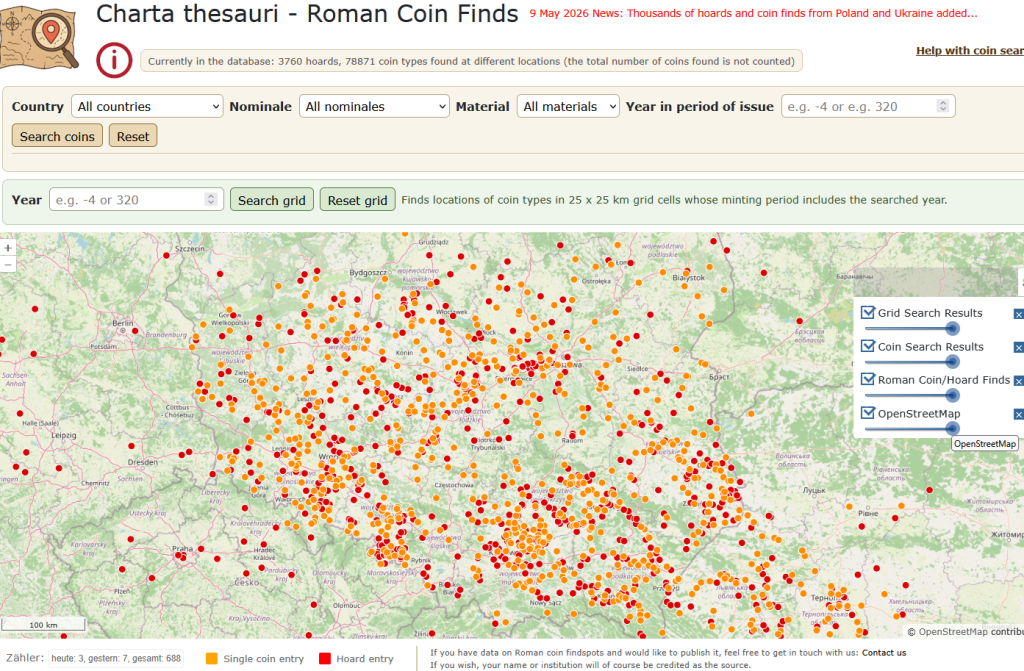
Data from Poland and Ukraine
Who would have thought…
So many databases, reports, and digital documents have been submitted here that there will definitely be no shortage of work for the coming months. And the flow of new material just keeps coming…
It is very likely that more than 20,000 hoards (and tens of thousands of single coins) can eventually be integrated here.
The total number of coins will probably reach well into the tens of millions.
Today, several thousand new entries from Poland and Ukraine were added to the map. It is truly impressive to see where Roman coins have been discovered.
The integration process is always quite an undertaking, because the data should naturally be transferred as carefully and accurately as possible (valid data, as little redundancy as possible, etc.). Every submitted database follows its own structure and logic, so great care has to be taken not to compare apples and oranges.
And then there are the reports from Germany and the local region itself — some including references to finds dating back to the 18th century — which are absolutely fascinating.
Some details are genuinely astonishing. Once all of this material has been processed, these entries will also be added to the database.
I will probably dig my dusty metal detector out of the attic today and take a closer look at a few places myself…
Still, the general rule applies: all datasets may naturally contain occasional inaccuracies or outliers.